Top 7 Security Mistakes When Using 192.168.188.1 And How to Fix Them Fast
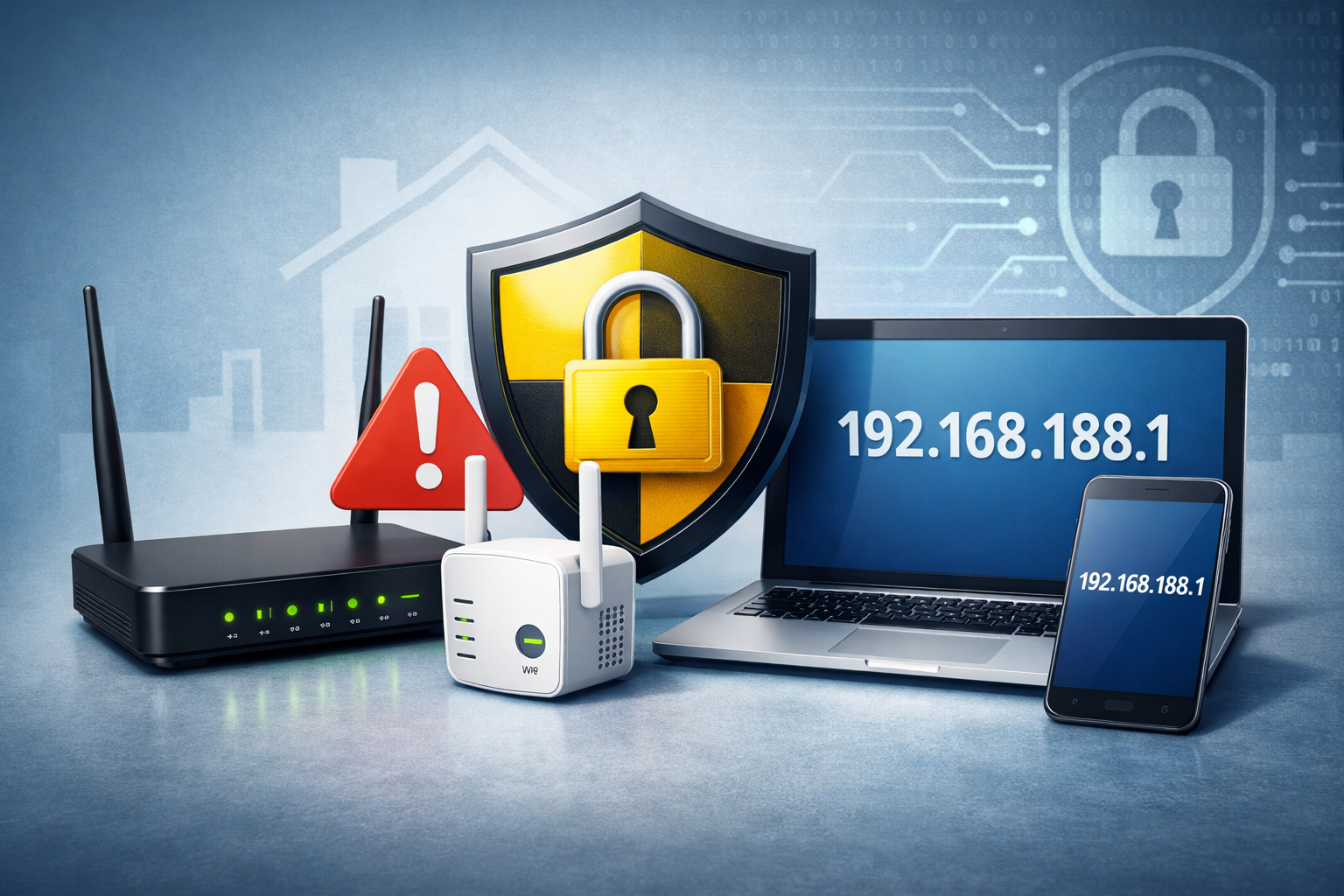
Accessing your router or WiFi repeater through 192.168.188.1 gives you full control over your network settings. However, many users unknowingly make critical security mistakes after login, which can expose their WiFi network to hackers, data theft, and unauthorized access.
This guide explains the top security mistakes when using 192.168.188.1 and shows simple fixes to protect your router and wireless network.
Is 192.168.188.1 Safe to Use for Router Login?
Yes, 192.168.188.1 is a private IP address commonly used to access router or WiFi repeater admin settings. It is safe only if proper security settings are applied after login.
What Security Mistakes Should You Avoid After Accessing 192.168.188.1?
The most common mistakes include using default passwords, outdated firmware, weak encryption, and unsecured repeater settings.
Let’s fix them one by one.
- Not Changing the Default Admin Login Credentials
Mistake:
Many users keep the default username and password after logging into 192.168.188.1 admin setup.
Risk:
Hackers can easily guess default credentials and take control of your router.
Fix:
- Change the admin username
- Set a strong password (letters + numbers + symbols)
- Using Weak WiFi Passwords
Mistake:
Using short or predictable WiFi passwords after 192.168.188.1 wireless setup.
Risk:
Weak passwords allow brute-force attacks and unauthorized access.
Fix:
- Use a minimum 12-character WiFi password
- Avoid names, phone numbers, or simple patterns
- Ignoring Router Firmware Updates
Mistake:
Skipping firmware updates in the 192.168.188.1 router settings.
Risk:
Outdated firmware contains known vulnerabilities exploited by hackers.
Fix:
- Check firmware updates monthly
- Enable auto-update if available
- Not Using WPA2 or WPA3 Encryption
Mistake:
Leaving WiFi security on outdated encryption like WEP or WPA.
Risk:
Old encryption can be cracked easily.
Fix:
- Select WPA2 or WPA3 in wireless security settings
- Save and reboot the router
- Leaving Remote Management Enabled
Mistake:
Remote access remains enabled after 192.168.188.1 login repeater or router setup.
Risk:
Anyone from outside your network can attempt to access your router.
Fix:
- Disable remote management
- Allow access only from local devices
- Not Securing the WiFi Repeater After Setup
Mistake:
Users configure the repeater using WiFi Repeater 192.168.188.1 admin setup but never secure it.
Risk:
An unsecured repeater can act as an open entry point for hackers.
Fix:
- Change repeater admin password
- Match encryption with the main router
- Disable WPS if not required
- Ignoring Firewall & Network Protection Settings
Mistake:
Firewall and protection settings are left disabled after 192.168.188.1 admin login.
Risk:
Your network becomes vulnerable to malicious traffic.
Fix:
- Enable firewall
- Turn on intrusion prevention and DoS protection
Best Security Tips After Accessing 192.168.188.1
- Change admin & WiFi passwords immediately
- Update firmware regularly
- Use WPA2/WPA3 encryption
- Secure both router and repeater
- Disable unnecessary features like WPS & remote access
FAQs
What should I do if 192.168.188.1 is not working?
Check your device connection, verify the IP address, and restart your router or repeater.
Can hackers access my router through 192.168.188.1?
Yes, if default settings or weak security configurations are used.
Is 192.168.188.1 used for WiFi repeater setup?
Yes, many WiFi extenders and repeaters use 192.168.188.1 admin setup for configuration.
Final Words
Securing your network after logging into 192.168.188.1 is not optional—it’s essential. By avoiding these common security mistakes and applying the fixes above, you can protect your router, WiFi repeater, and personal data from cyber threats.